

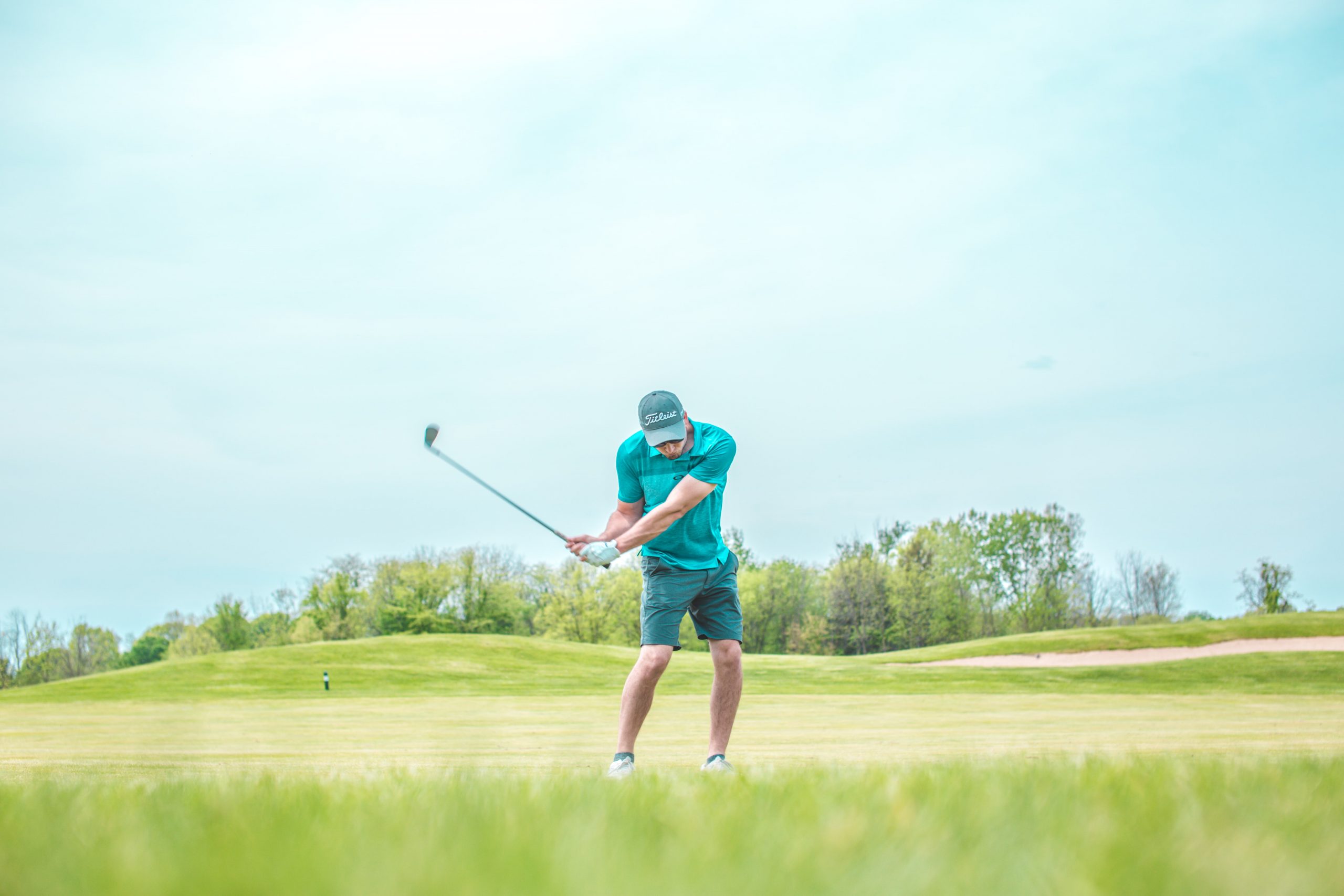
Golf injuries have been reported to affect 15-20% of golfers each year. Golf injuries are mostly due to overuse, but there are some traumatic injuries that can occur on the golf course. Golf requires explosive power for driving off the tee and fairways. These repeated actions can put stress on the tissues and cause injuries.
Lower back pain is the most common golf injury, accounting for around 20% of all golf injuries. Other common golf injuries include elbow pain, shoulder pain, foot pain and knee pain.
The research evidence indicates that recreational golfers tend to sustain more golf injuries than professional level golfers and that more injuries occur as players get older. Generally, overuse injuries tend to occur as we get older because the joint and tendon tissues become less able to withstand stress. It is often the case that the injury was sustained during some other sport or activity, but that it is aggravated during golf.
1.Low Back Pain?
Low back pain is the most common golf injury. The repetitive action of the golf swing is the number one cause of low back pain in golfers, so golf swing faults should be corrected by a professional. A ‘reverse angle’ swing fault is a common cause of back pain that occurs when the spine deviates from the vertical during the swing.
Numerous structures of the lower back can be affected – the discs, ligaments, muscles or facet joints – but in golfers, particularly older ones, the discs are most commonly affected. A herniated disc (slipped disc) refers to a protrusion of gel material from inside the disc. This can cause back pain and / or sciatica, particularly when bending forwards.
What can you do to prevent low back pain?
Research has shown that specific back exercises, known as core strength and stability exercises, can be effective in the prevention of low back pain. These back exercises are most effective where the back pain is caused by poor posture combined with the stress of a faulty golf swing. Core strength exercises using swiss balls can then be used to relieve and prevent back pain.
What should you do if you suffer low back pain?
Pain-relieving medication prescribed by a doctor and heat packs are usually necessary during the first few days following a herniated disc. Research has shown that patients with a herniated disc should remain as active as they possibly can, so long as their symptoms are not aggravated. A back brace can be helpful to improve posture and relieve pain by preventing aggravating movements.
2. Golfer’s Elbow?
Golfer’s elbow is inflammation of the tendons of the forearm at the point where they insert into the humerus (upper arm) bone on the inner side of the elbow. This inflammation is caused by forceful gripping activities such as when gripping the golf club, particularly if you have a ‘wristy’ technique.
Golfer’s elbow causes pain when the inner part of the elbow (medial epicondyle) is touched, and also if the elbow is straight and the hand is moved forward and back at the wrist. Typically the pain is made worse by gripping activities and in some cases simple things like picking up a bag or briefcase can cause intense pain.
What can you do to prevent golfer’s elbow?
Gripping the golf club too hard can bring on the golfer’s elbow pain. If you play golf for the first time in a long while make sure that you regularly stretch the muscles which work over the wrist by doing ‘limp-wrist’ and ‘policeman halting traffic’ type stretches.
Many people get symptomatic relief from golfer’s elbow by wearing a golfer’s elbow compression strap. Elbow straps work by preventing the wrist extensor muscles from contracting fully, thus reducing the strain on the tendons at the elbow. This reduces elbow pain.
What should you do if you suffer golfer’s elbow?
The inflammation of golfer’s elbow usually responds well to rest and ice therapy, as well as anti-inflammatory medication prescribed by a doctor. However, in long standing cases, where there is degeneration of the extensor tendons, anti-inflammatory medication, and especially corticosteroid injections, should be avoided because they can hinder tissue healing and in fact cause more degeneration. A TENS Machine can be a more effective form of pain relief.
Golfers elbow rehabilitation is achieved using a resistance band strengthening programme for the flexor tendons. It’s crucial that the load and number of repetitions are carefully recorded and progressively increased under the supervision of a physiotherapist. This ensures that the overload on the tendon is carefully controlled and gradually increased.
3. Plantar Fasciitis
Plantar fasciitis is inflammation of the plantar fascia (a fibrous sheath under the sole of the foot), at its attachment to the heel bone. It is a common cause of heel pain in golfers that typically comes on when walking round the golf course. Plantar fasciitis is particularly prevalent in those golfers with poor foot wear. Pain is common on the underside of the heel and the sole of the foot. A common sign of plantar fasciitis is heel pain upon waking in the morning when taking the first steps of the day.
What can you do to prevent plantar fasciitis?
Inappropriate footwear plays a major role in the development of plantar fasciitis. Golf shoes that have a lack of support for the sole of the foot are the biggest culprits, causing foot pain when walking around the course. A lack of support for the arch of the foot can cause excessive pronation (uncontrolled lowering of the arch) that can predispose golfers to plantar fasciitis. Research has shown that orthotic insoles that support the arch on the inner side of the foot can be helpful for limiting excessive pronation and preventing the pain of plantar fasciitis and heel pain.
What should you do if you suffer plantar fasciitis?
Apply ice packs (never apply ice directly to the skin) to the heel and sole of the foot for pain relief. Anti-inflammatory drugs prescribed by a doctor can provide relief for painful plantar fasciitis and wearing a heel support can take the strain off the painful heel when walking and playing golf.
Once the pain of plantar fasciitis begins to settle then stretching the plantar fascia helps to speed up healing in over 80% of cases. A plantar fasciitis night splint applies a sustained stretch to the plantar fascia during sleep, which helps to stretch and align the tissues and relieve foot pain.
4. Knee Pain
Knee pain is fairly common in golfers. Weight bearing and rotational forces on the knee during the golf swing, in addition to prolonged walking can aggravate existing knee injuries and lead to knee pain, particularly in the leading knee. Often the original knee injury is sustained doing a different activity or sport, but later in life golf becomes the activity that causes knee swelling and pain. Previous injuries to the meniscus (cartilage) or cruciate ligaments can predispose the knee joint to arthritis that can flare up due to the stresses placed on the knee during golf.
What can you do to prevent knee pain?
Pain in the knee joint can lead to weakness of the quadriceps (thigh) muscles. This leads to a vicious circle of further knee joint instability and more pain, leading to more inhibition and muscle weakness. Exercises to maintain quadriceps and hamstring muscle strength are encouraged to provide support for the affected joint. This strengthening should be done under the supervision of a chartered physiotherapist.
Gel cushion insoles in golf shoes can reduce the stress on the knees during golf. This can help to prevent knee pain symptoms and provide a more comfortable round of golf.
What should you do if you suffer knee pain?
A rest from golf is usually needed to prevent further stress on the knee joint. Ice packs can be applied for periods of twenty minutes every couple of hours (never apply ice directly to the skin as it can cause an ice burn). Alternatively an cryotherapy ice and compression device can relieve knee pain and swelling.
A knee brace can provide support and help to relieve knee pain during golf. Knee pain from arthritis tends to be worse in colder weather so many people find that a neoprene knee support can provide warmth and support. A more advanced osteoarthritis knee brace can improve the alignment of the knee, prevent further degeneration of the knee joint and provide relief from arthritis pain.
5. Shoulder Pain
Shoulder pain can occur in golfers due to damage to the rotator cuff muscles. The rotator cuff muscles (subscapularis, supraspinatus, infraspinatus and teres minor) are small muscles situated around the shoulder joint, which can become damaged during the repeated stresses of the golf swing, particularly if there is a swing fault such as ‘chicken winging’ (bent elbows at ball contact) or a ‘C-shaped posture’ (rounded lower back) that can put too much stress on the shoulders.
Rotator cuff injuries usually begin as inflammation (tendonitis) caused by small but repeated irritation. If the cause of the inflammation is not addressed, and continues over a long period of time, partial tears may develop in the cuff that could eventually become a tear all the way through one or more of the rotator cuff muscles.
What can you do to prevent shoulder pain?
Golfers have to ensure they maintain flexibility, strength and endurance of the shoulder muscles. Shoulder stabilisation exercises using resistance bands under the supervision of a physio can also help prevent pressure on the rotator cuff tendons.
In addition, golf swing technique should be checked by a professional to ensure that the shoulder posture and co-ordination during golf doesn’t overload the rotator cuff muscles.
What should you do if you suffer shoulder pain?
Physiotherapy treatment aims to reduce the amount of inflammation using ice therapy (never apply ice directly to the skin) and anti-inflammatory medication prescribed by a doctor. Anti inflammatory gel may be more appropriate where anti-inflammatory tablets are not well tolerated. For those who want to continue to play golf a neoprene shoulder support can provide support and reassurance.