


What is Frozen Shoulder?
Frozen shoulder or ‘adhesive capsulitis’ is a common cause of shoulder pain in people aged between 40 and 60, with women affected more than men. Shoulder specialist Dr Robert Codman first described ‘frozen shoulder’ in 1934, although this painful shoulder condition had frustrated patients and doctors for centuries before this. The fact that frozen shoulder merely describes what the patient experiences, is evidence that the condition was still poorly understood.
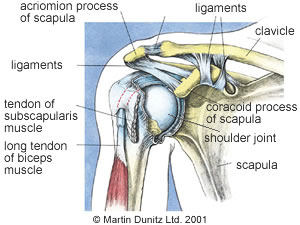
In 1945, Nevasier used the term adhesivecapsulitis and described the pathology as being characterised by adhesions and contractures of the fibrous capsule that surrounds the shoulder joint. While other conditions can produce a stiff shoulder and shoulder pain, frozen shoulder is characterised by adhesions of the capsule.
To date the cause of frozen shoulder has not been worked out, although it is associated with other medical problems such as diabetes, thyroid problems and a history of previous heart attack.
Frozen Shoulder Signs & Symptoms
Interestingly, the non-dominant shoulder appears to be affected more than the dominant shoulder. Those patients with frozen shoulder usually experience distinct phases with differing signs and symptoms.
The first phase is referred to as the ‘freezing’ phase. During this phase pain comes on slowly and leads to a gradual loss in shoulder movement. Some patients may not notice anything until they struggle to, say, fasten a bra reach for a seatbelt or shoulder joint capsule comb their hair. Eventually, over the space of a couple of months, the pain becomes so severe that it interferes with sleep because there is an exquisite pain when attempting to lie on the affected shoulder.
The second phase is referred to as the ‘frozen’ phase due to the continued restriction of shoulder movement, which can last for up to a year.
The final phase is referred to as the ‘thawing’ phase. This can take anywhere between 5 months and two years, although some patients can experience a more rapid recovery. During this time there is a gradual increase in shoulder range of motion.
As it is the soft tissues, specifically the capsule, that are affected by frozen shoulder, x-rays are clear. However, they are useful in distinguishing the problem from shoulder arthritis and calcific tendinopathy. The main diagnostic characteristic of frozen shoulder is decreased joint capsule volume (the fluid in the shoulder joint is decreased) when an arthrography is performed (an investigation whereby a liquid medium or dye is injected into the joint space).
The normal fluid volume of the shoulder is around 30 cubic cm, but during arthrography in frozen shoulder the joint will only take 10 cubic cm of dye. Another characteristic of frozen shoulder is the loss of the ‘axillary fold’ of the capsule on the arthrograph itself. It hasn’t gone anywhere; it has merely ‘stuck to itself’ and can’t be seen as a result.
What you can do
- Consult a sports injury expert
- Apply cold or hot packs/therapy to help relieve pain
- Use therapeutic putty to maintain grip strength & dexterity
- Wear a shoulder support for warmth & support
Frozen Shoulder Treatment
Ice therapy or heat packs can be effective to help pain relief, depending on personal preference. Pain relieving medication prescribed by a doctor is particularly helpful during the early ‘freezing” phase.
Physiotherapy treatment is the first option for frozen shoulder. The main aim of physiotherapy treatment is to gently stretch the shoulder joint capsule and maintain as much range of movement as possible. This is achieved through performing passive mobilisations which are done at various points in the range of shoulder movement. In addition, the patient must keep up a regular active stretching program to gently improve shoulder range of movement. All this stretching should be pain free.
Some evidence suggests that more aggressive shoulder mobilisation in conjunction with local anaesthetic and corticosteroid injections can provide pain relief and restore shoulder range of movement.
If the arm can’t be lifted to the level of the shoulder after three months then manipulation under anaesthetic (MUA) by an orthopaedic consultant may be appropriate. Following the procedure, the affected arm is held ‘abducted’ away from the trunk in order to maintain range of movement. The day after the MUA, the patient must begin a series of active exercises to restore the full range of motion. If these conservative measures fail then surgery may be indicated to release the adhesions and restore range of movement.
It is important to avoid total disuse of the affected arm. This can lead to muscle wasting in the forearm and hand. Grip strength and dexterity can be maintained by using therapeutic putty or hand grip exercisers to exercise the hand and fingers. This means that once the Frozen Shoulder pain resolves there will be a good level of function in the hand.
Frozen Shoulder Prevention
Because the causes of frozen shoulder are not fully understood, there is unfortunately no proven prevention strategy for this condition.