

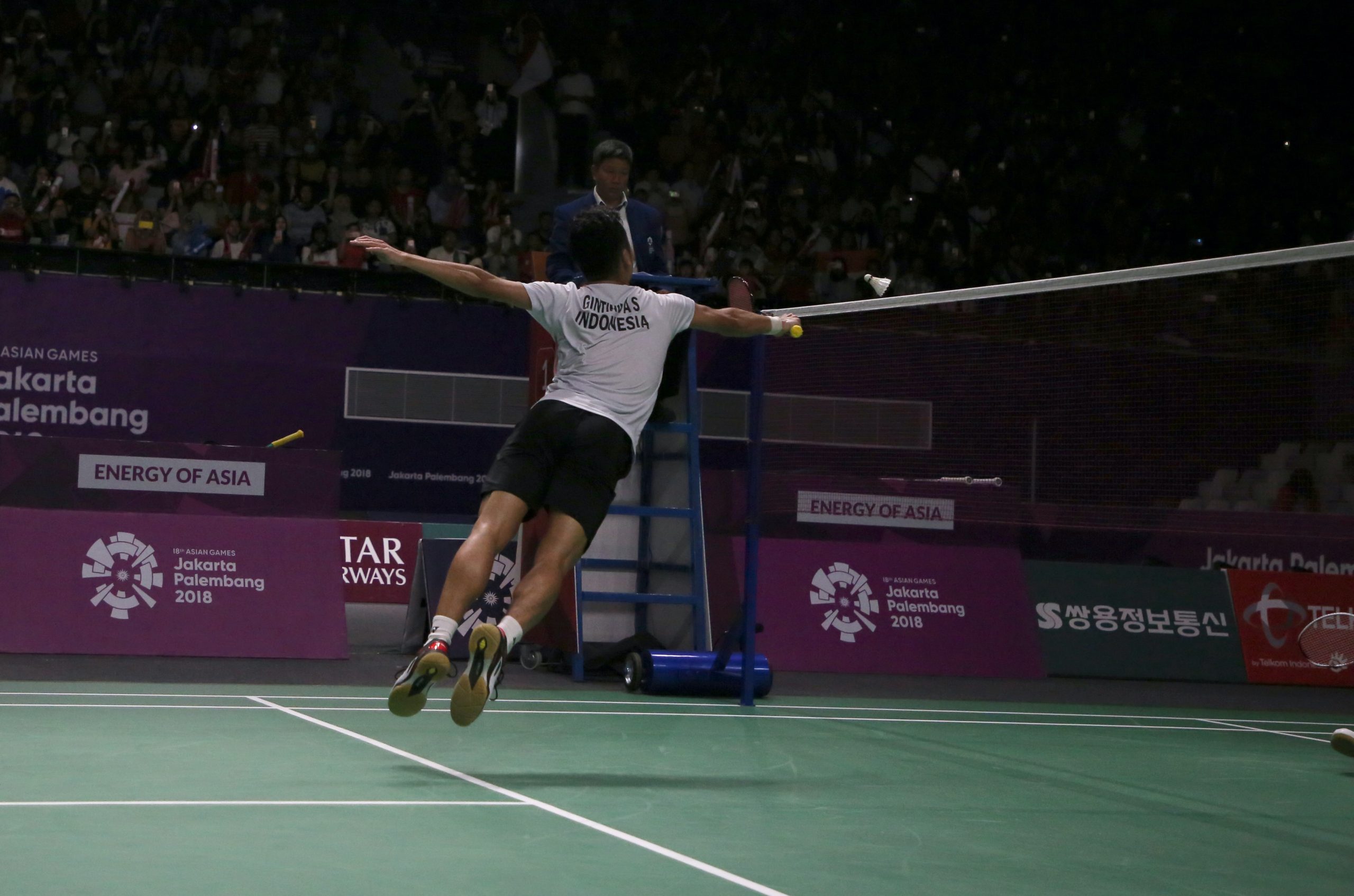
Injuries during badminton have been reported to occur at a rate of 2.9 injuries per player per 1000 hours of badminton playing. Badminton injuries tend to be due to overuse as badminton is a non contact sport. Badminton requires explosive power for flicks of the wrist, lunges, jumps and rapid changes of direction and these repeated actions can put stress on the tissues and cause injury.
Most badminton injuries occur around the ankle region, with a sprained ankle the most common injury, followed by achilles tendonitis. Because of the involvement of a racquet, upper limb injuries such as tennis elbow and rotator cuff injury are also quite common in badminton.
The published research indicates that men seem to sustain slightly more badminton injuries than women and that more injuries occur the older the players got. Generally, overuse injuries tend to occur as we get older because the joint and tendon tissue become less able to withstand stress. Also, unlike in younger people, this tissue doesn’t heal so well when we get older.
1. Sprained Ankle
A sprained ankle is the single most common injury in badminton. Some research papers report that ankle sprains account for around half of all injuries in badminton, although the exact number is unknown. The rapid changes in direction that are required during badminton can cause the ankle to roll over, particularly if the player is fatigued. Footwear that ‘grips’ the surface too much can also cause a sprained ankle in badminton. A sprained ankle refers to damage to the ankle ligaments and other soft tissues around the ankle. The ligament damage causes bleeding within the tissues and an extremely painful swollen ankle.
What can you do to prevent a Sprained Ankle?
Wearing the correct footwear that allows a small amount of ‘slide’ over the court surface can prevent an ankle twist. Applying an ankle brace or taping the ankle can also help to reduce the risk of a sprained ankle. Research from basketball has shown that the injury incidence in people with taped ankles was 4.9 ankle sprains per 1000 participant matches, compared with 2.6 ankle sprains per 1000 participant matches in students wearing ankle braces. This compared with 32.8 ankle sprains per 1000 participant matches in subjects who didn’t use taping or bracing.
What should you do if you suffer a Sprained Ankle?
Immediately following a sprained ankle it is important to follow the RICE protocol – rest, ice, compression and elevation (never apply ice directly to the skin). Ice therapy can reduce pain but pain-relieving medication may also be necessary. It is important not to put too much weight on the damaged ankle, so a removable plastic cast walker can be helpful to provide, protection and support and to allow early walking. Rehabilitation with a physiotherapist significantly improves the outcome following a sprained ankle. In the later stages of sprained ankle rehab wobble board training is designed to assist the re-education of balance and proprioception. Research has suggested that patients with ankle instability who underwent balance training experienced significantly fewer recurrent sprains during a follow-up period than those who did not follow the proprioception training programme.
2. Achilles Tendonitis
Achilles tendonitis is the common term for pain around the Achilles tendon and is reported frequently in badminton players. Achilles tendonitis usually comes on gradually, and is more common in those aged over 40. There is pain, which is worsened by activity, and the achilles tendon is painful to touch. Often the tendon feels very stiff first thing in the morning. The affected tendon may appear thickened in comparison to the unaffected side. Medical professionals refer to this condition as Achilles tendinopathy, which is characterised by degeneration of the Achilles tendon. The degeneration means that the tendon does not possess its normal tensile strength and may be liable to rupture with continued sporting activity. Some researchers report a high incidence of achilles tendon rupture in badminton players, but overall a rupture of the Achilles tendon is thankfully a rare injury.
What can you do to prevent Achilles Tendonitis?
Achilles tendonitis is an overuse condition, so sudden increases in activity levels should be avoided. The intensity, duration and frequency of badminton sessions should be carefully monitored and gradually progressed. Care should be taken if you begin playing more frequently or you begin playing at a higher standard which is physically more demanding, particularly if you are aged over 35. Research suggests that an ‘over pronated’ foot position (where the foot rolls inwards) can place excessive strain on the Achilles tendon and cause Achilles tendonitis. In this case it is often useful to consult a chartered physiotherapist, who can carry out a biomechanical assessment. If there is excessive pronation it is usually effective to insert an arch supporting insole that can help to correct the problem.
What should you do if you suffer Achilles Tendonitis?
Ice packs are effective at relieving pain, but the key to recovering from Achilles tendonitis is to elicit a healing response by gently overloading the tendon. This may require rest from badminton for up to three months, because the collagen tissue which the body produces to repair the damaged tendon takes three months to lay down and mature.
Research has shown that recovery is optimised by using ‘eccentric muscle work’ under the supervision of a physiotherapist. Eccentric muscle work refers to a muscle that is lengthening while contracting – a contraction that occurs during movements such as landing and decelerating. By progressively increasing the eccentric muscle force through the Achilles tendon, the tendon will adapt and get stronger. A compression ankle support can be very effective in relieving heel pain due to Achilles tendonitis. By applying compression to the heel and the arch of the foot, the support relieves strain on the Achilles tendon and gives rapid relief to those suffering with Achilles tendonitis.
3. Tennis Elbow
Tennis elbow is inflammation of the tendons of the forearm at the point where they insert into the humerus (upper arm) bone on the outer side of the elbow. This inflammation is caused by prolonged gripping activities such as when gripping a racquet during badminton. Tennis elbow causes pain when the outer part of the elbow (lateral epicondyle) is touched, and also if the elbow is straight and the hand is moved forward and back at the wrist. Typically the pain is made worse by gripping activities and in some cases simple things like turning a door handle can cause intense pain.
What can you do to prevent Tennis Elbow?
Gripping the badminton racquet either too hard or for too long can bring on the tennis elbow pain. Make sure the racquet is the correct size for your hand. If it is too small it will cause you to grip to hard. If you play badminton for the first time in a long while make sure you take regular breaks and stretch the muscles which work over the wrist by doing ‘limp wrist’ and ‘policeman halting traffic’ type stretches. For those who have suffered from tennis elbow in the past it may be a good idea to wear a tennis elbow compression strap. Elbow straps work by preventing the wrist extensor muscles from contracting fully, thus reducing the strain on the tendons at the elbow.
What should you do if you suffer a Tennis Elbow?
The inflammation of tennis elbow can be alleviated with rest and ice therapy or with the use of anti-inflammatory medication or a corticosteroid injection. However in long standing cases, where there is degeneration of the extensor tendons, anti-inflammatory medication, especially corticosteroid injections, should be avoided. This is because they can hinder tissue healing and in fact cause more degeneration. Tennis elbow rehabilitation is achieved using an eccentric strengthening programme for the extensor tendons. It’s crucial that the load and number of repetitions are carefully recorded and progressively increased under the supervision of a chartered physiotherapist. This ensures that the overload on the tendon is carefully controlled and gradually increased.
4. Rotator Cuff Injury
Shoulder pain can occur in badminton players because there are repeated shoulder stresses during badminton, particularly the overhead shots. The rotator cuff muscles (subscapularis, supraspinatus, infraspinatus and teres minor) are small muscles situated around the shoulder joint, which can become damaged during the stresses of badminton. Typically, rotator cuff injuries will begin as inflammation (tendonitis) caused by small but continuous irritation. If the cause of the inflammation is not addressed, and continues over a long period of time, partial tears may develop in the cuff that could eventually become a tear all the way through one or more of the rotator cuff muscles.
What can you do to prevent a Rotator Cuff Injury?
Badminton players must pay attention to flexibility, strength and endurance of the shoulder muscles. Shoulder stabilisation exercises under the supervision of a physiotherapist can also help prevent pressure on the rotator cuff tendons. In addition, any increases in the amount of training or competition must be gradual so as not to overload the rotator cuff muscles. In particular repetitions of the smash shot should be increased gradually to allow the rotator cuff tendons to adapt.
What should you do if you suffer a Rotator Cuff Injury?
Physiotherapy treatment is effective in treating acute (short-term) inflammation and chronic (long-term) degeneration of the cuff where a tear is not present. The first aim of treatment is to reduce the amount of inflammation using ice therapy (never apply ice directly to the skin) and anti-inflammatory medication prescribed by a doctor. Anti-inflammatory gel may be more appropriate where anti-inflammatory tablets are not well tolerated. For those who want to continue with badminton activities a neoprene shoulder support can provide support and reassurance.
5. Patellar Tendonitis
Patellar tendonitis is degeneration of the patella tendon, which is located just below the knee cap. Patellar tendonitis is also known as ‘jumper’s knee’. Typically knee pain comes on gradually during jumping and landing during badminton. Over time, the strain on the patellar tendon becomes too great and microscopic damage develops in the tissue that makes up the tendon. Patellar tendonitis causes pain in the tendon which is worsened by activity. The areas of degeneration feel tender to touch. Often the tendon feels very stiff first thing in the morning. The affected tendon may appear thickened in comparison to the unaffected side.
What can you do to prevent Patellar Tendonitis?
Increases in the amount of badminton practise must be gradual so as not to overload the patella tendon. In particular repetitions of jumping and landing should be increased gradually to allow the patella tendon to adapt. Early recognition of patellar tendonitis by a doctor or physiotherapist helps greatly, because the outcome is better if treatment is initiated early. In minor cases of patellar tendonitis a patellar tendon strap can be effective in relieving symptoms by reducing the cross sectional area of the tendon, the pressure applied by the patellar tendon strap prevents maximal force being transmitted through the tendon. This reduces the strain on the patellar tendon and helps to alleviate symptoms during badminton.
What should you do if you suffer Patellar Tendonitis?
Increases in the amount of badminton practise must be gradual so as not to overload the patellar tendon. In particular, repetitions of jumping and landing should be increased gradually to allow the patellar tendon to adapt. Early recognition of patellar tendonitis by a doctor or physiotherapist helps greatly, because the outcome is better if treatment is initiated early. In minor cases of patellar tendonitis a knee strap can be effective in relieving symptoms by reducing the strain on the patellar tendon and helps to alleviate symptoms when playing badminton.